
Panchkoshi Yatra Varanasi 2026: Timing, Distance & Sacred Places
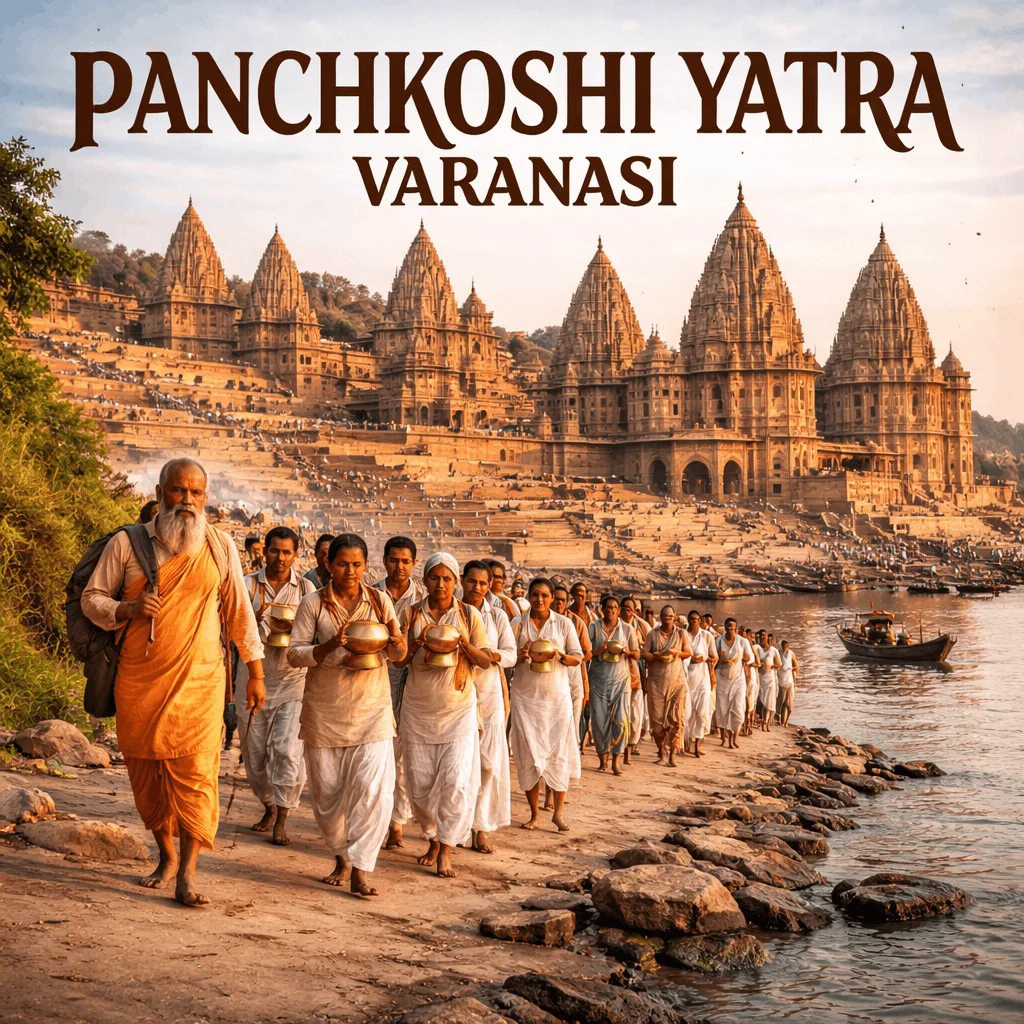
Pilgrims walk the panchkoshi yatra in Varanasi, a journey long kept alive through generations. This path winds fully around Kashi, tracing its ancient limits on foot. Walking here stirs something quiet within – clarity often follows such movement. Centuries have shaped these steps, each turn echoing beliefs older than memory. Devotion grows near the river where stories say Shiva rests close to those who come. Energy hums beneath cracked stones and narrow lanes, felt more than spoken. The circle holds meaning beyond ritual – it reflects cycles life keeps returning to
Walking The Varanasi Five Shrines Pilgrimage
Pilgrims walk through peaceful lanes and river bends along the ancient edge of Kashi Khand starting at dawn. Clusters of shrines, water tanks, and sacred groves can be found on five areas of land, each known as a kos. Some claim that walking these paths with focus can lighten inner clarity and release burdens from the past. Long ago, it’s said, Lord Rama walked this route during Treta Yuga seeking truth beyond sorrow. Victory followed those steps; later, the Pandavas circled too, drawn by release from worldly chains. Devotion marks each pace, not speed or show
Every year, crowds gather for the panchkoshi yatra, drawn by sacred timings. Winding paths lead past over 108 shrines honoring Shiva, alongside smaller sites tied to figures like Vinayaka, Devi, and Vishnu. Though numbers swell at key moments, the journey stays rooted in quiet tradition. Along dusty trails, old stones mark devotion older than memory
Panchkoshi Yatra Varanasi Sites On The Holy Path
Starting at Manikarnika Ghat, the panchkorsi yatra Varanasi places around a sunwise path. After bathing in the river’s waters, travelers move forward with a solemn pledge made close to Kashi Vishwanath, then Annapurna, followed by Gyanvapi. Power lives differently at each of the five stopping points. One belief shapes the next, yet every halt holds its own quiet strength.
The panchkoshi yatra varanasi places form a clockwise circuit starting and ending at the eternal Manikarnika Ghat. Pilgrims start their journey after performing a holy dip in the Ganga followed by taking a sacred vow at three temples which include Kashi Vishwanath Temple and Annapurna Temple and Gyanvapi. The five main padavs (halts) serve as resting and worship points, each holding unique spiritual power:
- Kardameshwar
Key Temple / Significance: The temple of Kardameshwar Mahadev connects to both Sage Kardam and Bindu Sarovar.
Approximate Segment Distance: 3 Kos
- Bhimchandi
Key Temple / Significance: The Bhimchandi Temple and Chandikeshwar Mahadev establishment connects to both Pandavas and Gandharva Sagar Kund.
Approximate Segment Distance: 5 Kos
- Rameshwar
Key Temple / Significance: The temple of Rameshwar Mahadev exists near Varuna River and Tulja Bhavani as the establishment of Lord Rama.
Approximate Segment Distance: 7 Kos
- Shivpur
Key Temple / Significance: The site contains Panch Pandav Shivlingas and Draupadi Kund.
Approximate Segment Distance: 4 Kos
- Kapildhara
Key Temple / Significance: The temple of Kapildhara Mahadev exists as the installation of Sage Kapil.
Approximate Segment Distance: 3 Kos
The panchkoshi yatra varanasi places devotees through rural areas and small streets and old farmland with temples always maintained on the right side of the road. The journey ends with pilgrims making their final offerings and returning to Manikarnika Ghat to receive blessings.
The panchkoshi yatra varanasi distance pathway directs devotees through rural areas and narrow streets and ancient agricultural land while temples remain situated on the right side of the pathway. The pilgrims end their journey by making offerings before they return to Manikarnika Ghat to receive blessings.
Panchkoshi Yatra Varanasi Distance
The complete distance of panchkoshi yatra varanasi equals 25 Kos, which converts to about 80 kilometers using the traditional calculation of 3.2 kilometers per Kos. Modern maps show the distance to be around 88 kilometers because they include all parts of the holy circuit. The distance requires travelers to walk without shoes because they need to prove their faith, which results in a sacred experience that will change their life. The different segments of the journey help build physical strength while allowing pilgrims to experience the holy atmosphere of Kashi.
Panchkoshi Yatra Varanasi Timing To Know
The Hindu months of Chaitra, Vaishakh, Phalgun, Kartik, Shravan, and Adhik Maas (Purushottam Maas) are the most auspicious for the Panchkoshi Yatra Varanasi. With one padav halt per night for rest, prayer, and introspection, the traditional format lasts five days. Due to increased spiritual energy, many people finish the entire Panchkoshi Yatra in a single day on Maha Shivratri. In order to preserve the purity and focus of their journey, pilgrims opt to begin their journey early in the morning following the Ganga snan.
Planning For Panchkoshi Yatra Varanasi 2026
The panchkoshi yatra varanasi 2026 date allows devotees to experience spiritual activities that occur during this time because the time of the yatra matches their religious duties. Pilgrims who wish to experience the ancient route to walk will find the five-day format with traditional halts to be unchanged. The panchkoshi yatra varanasi distance can be walked fully by pilgrims who want a closer connection to Kashi’s sacred geometry because they will be walking the full distance.
The panchkoshi yatra continues to inspire lakhs of souls, preserving Kashi’s heritage while offering a direct path to divine blessings. The journey requires all travelers to walk with devotion because each step becomes an offering and each stop becomes a holy moment which leads to eternal inner peace throughout the sacred path of Varanasi.

Recent Posts

Distance From Varanasi To Ayodhya: Best Routes And Travel Options

Honeymoon Tour Packages India Romantic Destinations Guide

Budget Friendly Travel Destination Tours In India 2026 Complete Guide

Thailand